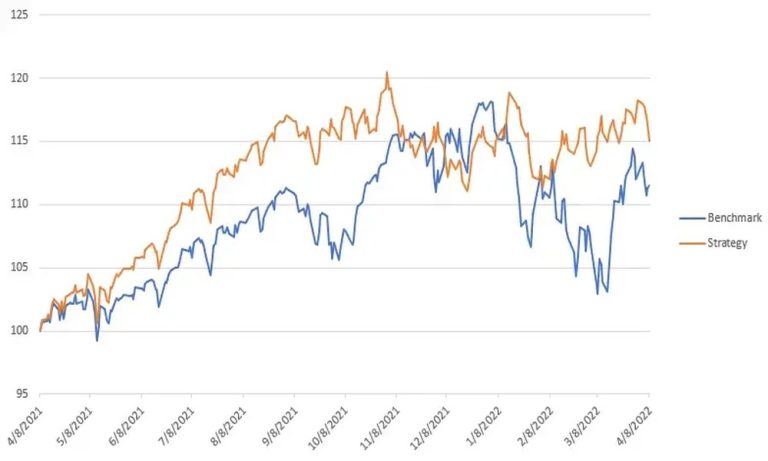
In investment circles, the age-old debate between concentrated and diversified portfolios often sparks spirited discussions. While diversification has been the conventional wisdom for decades, particularly as a strategy to mitigate risk, recent market patterns suggest that concentrated portfolios can deliver superior performance, especially in volatile cycles. Understanding why requires a deeper look at market behaviour, investor psychology, and the strategic allocation of capital to high-conviction ideas.
Conventional wisdom has long promoted diversification as the cornerstone of risk management. Spreading investments across a broad range of asset classes, sectors, and geographies is meant to smooth returns and limit exposure to any single market shock. Indeed, during periods of market stability, diversification can provide predictable results, reducing the likelihood of catastrophic losses. However, in cycles characterised by high volatility and rapid shifts in economic indicators, this safety net can become a double-edged sword. Over-diversification may dilute the potential upside of high-performing investments, leading to muted overall returns.
The Case for Concentration in Volatile Markets
Concentrated portfolios, defined by a focused allocation to a smaller number of high-conviction investments, can outperform diversified ones during turbulent market periods. When investors identify companies or sectors with strong fundamentals, sustainable growth prospects, and competitive advantages, concentrating capital allows these winners to have a more meaningful impact on portfolio performance. Historical data from market cycles shows that top-performing stocks often deliver outsized gains that overshadow losses in weaker holdings. Therefore, a carefully curated, concentrated portfolio can amplify returns rather than simply mitigating losses.
Another key advantage of concentration is agility. In volatile markets, the ability to pivot quickly is crucial. A concentrated portfolio simplifies monitoring and decision-making, allowing investors to react promptly to changing market dynamics. For instance, during periods of economic uncertainty, companies with robust balance sheets and resilient business models tend to outperform. By allocating more capital to these opportunities, investors can navigate turbulence with greater strategic control compared to a broadly diversified portfolio where resources are spread thinly across many weaker performers.
Concentration also aligns with the principle of “invest in what you know.” Legendary investors such as Warren Buffett and Charlie Munger have repeatedly emphasised the value of deep understanding over broad exposure. When investors fully comprehend the competitive positioning, market dynamics, and growth potential of their holdings, they can confidently allocate larger portions of their capital to the best ideas. This disciplined approach, rooted in research and analysis, often leads to superior alpha generation-the excess returns above the market benchmark-even in cycles marked by uncertainty.
Risk Management Within Concentrated Portfolios
A common misconception is that concentrated portfolios inherently carry unacceptable risk. While concentration does involve greater exposure to individual securities, disciplined risk management techniques can mitigate this. Strategic selection based on fundamental analysis, adherence to valuation discipline, and careful monitoring of macroeconomic trends are essential. Additionally, investors can employ hedging strategies or maintain a small allocation to defensive assets to cushion against extreme market shocks without sacrificing the potential for significant upside.
It is also important to distinguish between reckless concentration and informed concentration. The former involves speculative bets on unknown or poorly understood investments, while the latter is a deliberate, research-driven allocation to high-quality assets. By focusing on a handful of companies or sectors with strong financial health, clear competitive advantages, and resilient revenue streams, investors can construct a concentrated portfolio that maximizes potential returns while keeping risk within acceptable boundaries.
Navigating Volatility Through Selective Exposure
Volatile market cycles, such as those triggered by economic recessions, geopolitical tensions, or rapid shifts in monetary policy, tend to create divergences in stock performance. Some companies are more sensitive to macroeconomic shocks, while others demonstrate resilience due to pricing power, essential services, or structural growth trends. By selectively concentrating on stocks that exhibit these resilient characteristics, investors can capture gains while avoiding significant drawdowns.
Data from institutional investors and asset managers supports this approach. Studies have shown that top-performing funds often hold a relatively small number of high-conviction positions that drive the majority of their returns. This contrasts sharply with the average diversified portfolio, where returns are diluted across many holdings, some of which may underperform during turbulent periods. Consequently, the ability to concentrate investments on proven performers becomes a strategic lever for alpha generation.
Conclusion
Concentrated portfolios present a compelling alternative to the traditional diversified approach, particularly during volatile market cycles. By emphasizing high-conviction investments, disciplined research, and strategic allocation, investors can achieve superior alpha generation while maintaining controlled risk. This approach not only enhances financial outcomes but also simplifies portfolio management and reinforces long-term investment discipline.
While diversification remains a valid strategy for certain investors and market conditions, the case for concentration is increasingly persuasive. Investors who are willing to conduct thorough analysis, commit to their best ideas, and maintain disciplined oversight can harness the full potential of concentrated portfolios. In doing so, they position themselves to outperform broadly diversified stocks and achieve meaningful long-term gains, even amidst the uncertainties of volatile cycles.