

Archive

April 2026

Browsing

Traders predict market movements and trade effectively. They can do this by learning how to read chart patterns.

About forex trading

Forex trading is thriving on the flow of currencies. The recurring patterns on FX charts have valuable clues about the potential future price movements. It empowers traders to navigate the market.

Forex charts are a visual presentation of the ongoing battle between:

  • buyers
  • sellers

The price leaves a trail on the chart as the currency pair rises and falls. It forms a specific:

  • geometric shapes
  • patterns

The patterns signal potential continuations of the current trend. Traders gain valuable insights by understanding the types of forex chart patterns, such as:

  • head and shoulders
  • ascending triangles
  • double tops

Types patterns

You can explore the most commonly encountered patterns, which signal the following:

  • potential trends
  • continuations
  • reversals

Reversal chart patterns

Reversal chart patterns appear as valuable tools in the toolkit of a trader. It signals potential trend reversals. The patterns appear at the peak of an uptrend or the trough of a downtrend. It hints at a possible change in direction.

Traders anticipate the potential turning points and adjust their strategies by:

  • recognizing these formations
  • understanding their implications

This foresight capitalizes on:

  • new trends
  • exit positions

Continuation chart patterns

The continuation chart patterns provide valuable signals to traders capitalizing on existing trends. These patterns emerge in an uptrend or a downtrend. It suggests a continuation of the overall price movement.

Traders can identify the potential entry points by recognizing these formations. They can also stay invested in positions aligning with the trend’s direction. The continuation patterns act as consolidation phases. It is where price pauses to gather strength before resuming its upward or downward course.

Bilateral chart patterns

The bilateral patterns in FX trading are chart formations that never have a clear directional bias. They signal that a price move occurs. But, the direction is pending until a breakout happens. The patterns provide valuable insight for traders when preparing for potential market movements in either direction.

Traders can navigate the forex market with greater precision when they understand the bilateral patterns and their implications.

Types of forex chart pattern

There are widely utilized forex chart patterns among experienced traders.

Head and shoulders

The forex charts are filled with:

  • cryptic symbols
  • geometric shapes

Skilled traders use these patterns as they hold the key to unlocking valuable insights into price movements. The head and shoulders are a prominent bearish reversal signal.

For example:

A forex chart depicts the price movement of a currency pair.

The head and shoulder pattern resembles a human silhouette flanked by two lower peaks, either head or shoulders. A horizontal line connects the swing lows that form the base of the head and shoulders.

The magic of head and shoulder patterns lies in the ability to signal a potential shift in the market sentiment.

Double top and bottom

The double top pattern is a potential bearish reversal signal. It warns traders of a potential shift from the uptrend to the downtrend. The double top pattern appears when the price reaches the peak, which is the “first top.” Then, it rallies to form another peak, which is the “second top”.

The horizontal line connects the swing lows, forming a line between the two tops. The importance of the double top is in its ability to signal a possible exhaustion of buying pressure.

FAQs

Are there only two types of forex chart patterns?

There are more than two forex chart patterns, including:

What is the use of chart patterns?

Chart patterns are the visual representation of:

How does it work?

Chart patterns do not work as magical predictors. They offer a statistical edge that shows the success rate in reversing a downtrend.
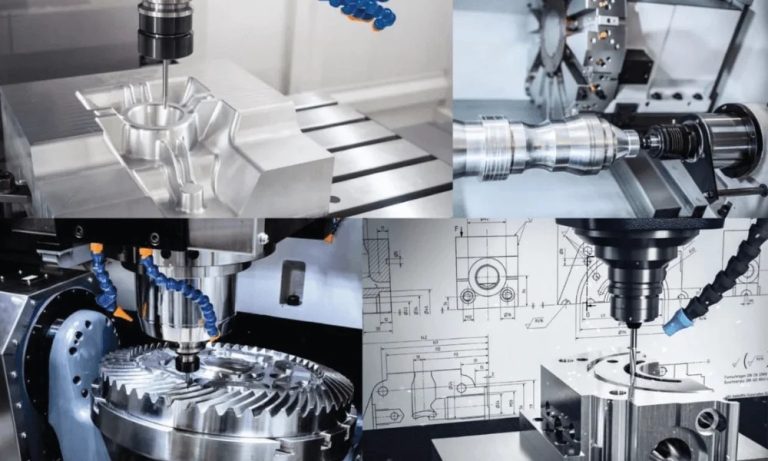

Modern production relies on accuracy and repeatable control to deliver reliable parts. Precision machining plays a key role by shaping materials with tight control and minimal variation. Smooth finishes and strong internal structure both depend on careful tool paths and stable cutting conditions that reduce defects.

When processes stay consistent, parts meet strict standards across batches while limiting waste and rework, strengthening the impact of thailand precision machining in reliable manufacturing.

Controlled Tool Path Accuracy

Careful path planning ensures each cut follows exact coordinates, reducing uneven marks and rough edges. Stable movement limits vibration, which can damage the outer layer and weaken internal strength. Proper alignment between the tool and workpiece supports uniform material removal through every pass.

Optimized Cutting Parameters

Selecting proper speed, feed rate, and depth helps maintain a steady cut that protects material quality. Balanced settings prevent overheating, which can change material properties and create weak spots. Fine-tuning reduces tool wear, keeping edges sharp for cleaner surfaces.

Surface Finish Enhancement Methods

Refinement steps improve outer quality while supporting strength within the component. Techniques focus on removing minor imperfections left after primary cuts.

  • Fine abrasive passes reduce micro scratches without affecting material strength
  • Controlled polishing improves reflectivity while keeping the structure stable and uniform
  • Minimal pressure finishing avoids surface distortion during final refinement stages
  • Consistent tool condition supports even texture across the entire component area
  • Clean handling prevents contamination that may affect outer layer quality

Material Stability Control

Temperature and stress control during machining keep the structure uniform from start to end. Managing heat avoids expansion that may distort dimensions or create internal tension. Secure clamping methods prevent movement that can introduce hidden defects.

Structural Strength Improvement

Strong internal form depends on precise cuts that avoid microcracks or stress points. Smooth transitions between features reduce stress concentration under load. Balanced removal methods maintain grain structure without unnecessary damage. The thailand precision machining supports reliable outcomes where strength and durability remain essential across repeated use.

Reliable production requires attention to both outer quality and inner strength at every stage. Careful control of movement, cutting settings, and material conditions helps reduce defects while improving consistency. Refinement techniques further enhance results without harming structure. When these elements work together, the parts deliver stable performance with fewer failures and less waste.

FAQs

Why does precision machining improve surface finish in complex components today?

It controls cutting action carefully, producing smoother results with minimal irregularities.

How does machining support structural integrity in demanding mechanical components today?

It reduces stress points and maintains material strength through controlled removal.

Can machining settings affect both finish quality and internal strength outcomes?

Yes, proper adjustments ensure smooth surfaces while preserving a strong internal structure.

If you’ve ever stood at the base of a 50-story skeleton in Austin or watched a crew hang “static wire” across a Texas canyon, you know that these jobs aren’t for the faint of heart. But there’s a side of the trade that doesn’t get enough credit: the sheer science of the gear. We aren’t just talking about “wrenches and pliers” anymore. In 2026, the work tools of the trade have evolved into high-performance instruments designed to save your joints as much as your life.

Whether you’re a veteran steelworker or a rookie lineman, your career is a marathon, not a sprint. To cross the finish line with your knees and back intact, you need to understand the technical “why” behind the ironworker gear and lineman tech you strap on every morning.

The Anatomy of the Iron: Beyond the Spud Wrench

For decades, the ironworker tool belt setup was a badge of heavy-metal honor. The heavier the belt, the tougher the man, right? Wrong. The modern steelworker knows that unnecessary weight is the enemy of longevity.

The Engineering of the Ironworker Spud Wrench

The ironworker spud wrench is a masterclass in minimalist design. Its tapered tail serves as a drift pin, allowing you to “marry” two massive steel plates with a single hand. But have you noticed the shift in materials lately? We’re seeing more high-alloy steels that offer the same torque-strength with 15% less weight. When you’re making 500 connections a day, that’s a massive reduction in repetitive strain.

The “Must-Haves” for the Structural Rig

  • Honed Bull Pins: Modern pins are being treated with friction-reducing coatings. It sounds fancy, but it means you spend less time hammering and more time connecting.
  • Torque-Multiplier Anchors: As structural standards get tighter, these structural ironworker tools ensure bolts are tensioned to exact specs without requiring a six-foot “cheater pipe.”

The Lineman’s Ascent: A Material Science Battle

If the ironworker is the king of the beam, the lineman is the master of the vertical climb. Here, the “technical comparison” of gear isn’t just a shop-talk debate-it’s a matter of biological preservation. According to recent industry studies, a lineman’s knees endure forces up to three times their body weight with every step while wearing “hooks.”

Climber Materials: The Pro-Level Breakdown

Choosing your climbers is the most personal decision you’ll make in the trade. Let’s look at the “Three Titans” of material:

Material

The “Why”

The Downside

Best For

Ductile Steel

Rigid, reliable, and “bends before it breaks.”

It’s a boat anchor on your feet.

Apprentices on a budget.

Aircraft Aluminum

30% lighter than steel with excellent fatigue resistance.

Can be prone to deep scratches that compromise strength.

The daily-grind journeyman.

Forged Titanium

The holy grail. Highest strength-to-weight ratio in existence.

It’ll cost you a week’s paycheck (or more).

Career pros looking to retire without a cane.

The Digital and Physical: 2026’s Essential Hand Tools

The lineman tools have seen a massive “tech-injection” recently. We aren’t just using brute force; we’re using precision.

1. Smart Lineman Impact Wrenches

The newest Lineman Impact Wrenches now feature Bluetooth logging. Why? Because the utility company wants proof that every bolt on that transformer was torqued to the exact foot-pound required. It takes the guesswork out of the job and keeps the liability off your shoulders.

2. The Modern Electrical Hot Stick

We’ve moved past basic fiberglass. New “hot sticks” use nano-composite coatings that shed water more effectively. In a humid Texas summer, a “hydrophobic” stick is a literal lifesaver, preventing the moisture tracking that leads to arc flashes.

3. Hydraulic Hand Tools (The “Finger Savers”)

Battery-powered Crimpers and cutters have replaced manual “bolt-cutters” for almost everything. These tools can deliver 12 tons of force with the pull of a trigger, saving the carpal tunnel in your wrists for things you actually enjoy-like holding a cold beer after the shift.

Weight Distribution: The Hidden Killer

Ask any old-timer about their “tool-belt back,” and they’ll tell you it’s no joke. The way you organize your ironworker tool belt setup is a technical skill in itself.

The Physics of the Belt: Every inch a tool sits away from your center of gravity increases the “perceived weight” on your lumbar spine. By using modular, lightweight ironworker gear bags and keeping your heavy work tools tucked tight to the hip, you can reduce spinal compression by nearly 20%.

Conclusion

At the end of the day, the tools don’t make the worker, but they sure as heck save them. Whether you’re reaching for that trusty ironworker spud wrench or syncing your Lineman Impact Wrench to a tablet, the goal remains the same: precision, safety, and a job well done. Technology is finally catching up to the grit of the American tradesperson, and if you aren’t upgrading your gear, you’re just making a hard job harder.

Stay safe, watch your “six,” and keep those tools oiled.

FAQs

1. Is it better to buy a pre-made lineman tools kit or build my own?

For beginners, a pre-made kit ensures you have the OSHA-required basics. However, most veterans eventually customize their setup, swapping in titanium climbers or specific hand tools that fit their grip and height.

2. How do I know when my ironworker gear needs to be retired?

Look for “the shiny spots.” On tools like the ironworker spud wrench or bull pins, mushrooming heads or worn-down teeth on the wrench jaw are signs of metal fatigue. If a tool looks “stressed,” it probably is-toss it before it snaps.

3. What’s the biggest mistake people make with their tool belt setup?

Overloading. We call it “the hoarding instinct.” If you haven’t used a tool in three days, it doesn’t belong on your belt. Every extra pound is a tax on your hips and knees.

4. Are cordless tools really better than manual ones for linemen?

In terms of speed and physical health, yes. Manual crimpers require massive upper-body strength and can cause long-term joint damage. Cordless hydraulic tools are the industry standard now for a reason.

5. How do I protect my work tools from the Texas humidity?

Rust is the silent killer. Use a light coat of WD-40 or a dedicated tool wax on all non-insulated metal surfaces once a week. For leather bags, use a beeswax-based conditioner to keep the rain from soaking in.