Category

Business

Category

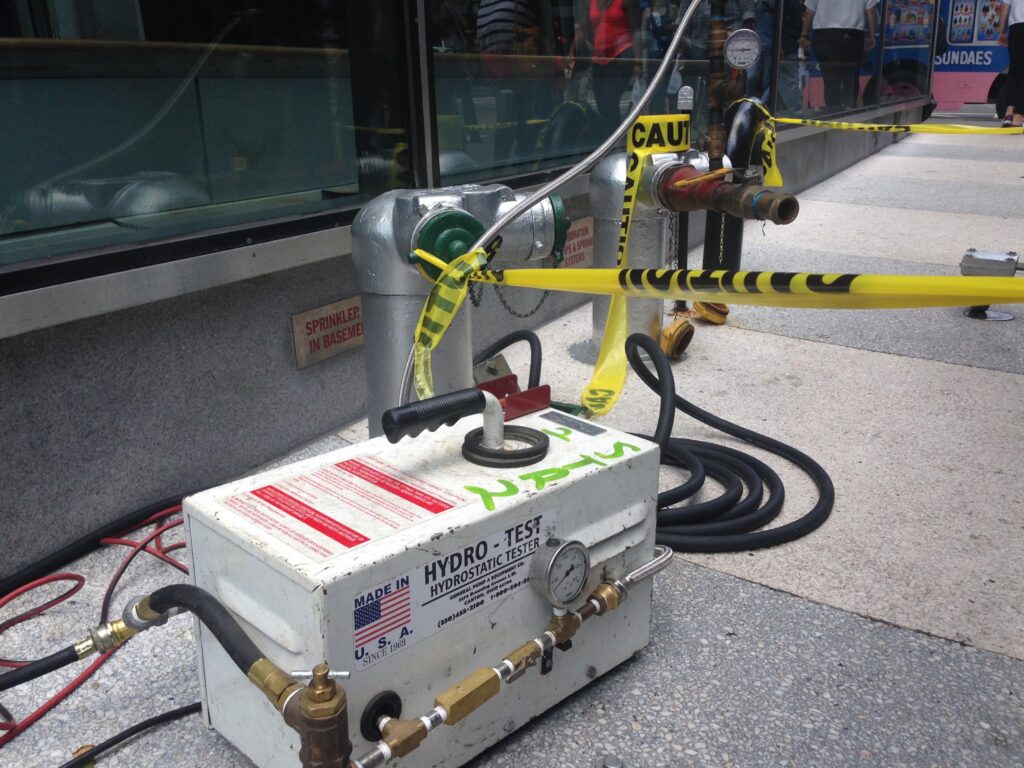
What is Hydrostatic testing? Well, hydrostatic testing is an important process that is used to determine the structural integrity of a pressure vessel, hydrostatic testing for pipelines, or other component. It is a non-destructive method that tests a component by filling it with water or other fluid and subjecting it to a certain pressure. Hydrostatic testing is an important part of the manufacturing process, as it can ensure the safety of the component and help prevent accidents or damage. In this blog post, we’ll take a closer look at hydrostatic testing, explaining what it is and why it is so important.

What is hydrostatic testing?

Hydrostatic testing is a process of testing for the structural integrity of a pressure vessel or piping system. It involves filling the vessel or pipe system with a liquid, usually water, and then pressurizing it to a specific test pressure. This test is designed to simulate conditions that are likely to occur during the actual operation of the equipment. 

When pressurized with water, any flaws or defects in the equipment will become evident, as any leaks or weaknesses will cause the pressure in the system to drop. If the pressure holds steady, the system passes the test. Once the pressure reaches a certain point, a hydrostatic tester will measure the pressure and verify that it is within acceptable parameters.

Hydrostatic testing is an essential part of ensuring that all pressure vessels and piping systems are safe and up to code before they can be used in operations. It is also required by most governing bodies, such as OSHA and NFPA, to ensure the safety of workers and operators of the equipment. By regularly performing hydrostatic tests on your equipment, you can ensure that your pressure vessels and piping systems are working properly and meeting all safety standards.

Why is hydrostatic testing important?

It is an essential part of keeping equipment in good working order. It helps to detect any weaknesses or flaws in pressure vessels, pipes, and other mechanical parts. This type of testing evaluates the integrity of a pressure vessel or piping system, by subjecting it to a higher pressure than normal operating conditions. The test helps to identify any potential weaknesses that can be addressed before any damage or failure can occur.

Additionally, hydrostatic testing also helps to determine the efficiency of the system and if there are any safety issues that could potentially arise. For example, if a pressure vessel has weakened spots, they can be identified and corrected before they cause any harm. By regularly performing hydrostatic testing, the risk of an accident or injury due to faulty equipment is reduced significantly.

Overall, hydrostatic testing is a critical part of keeping your equipment in safe working condition. It can detect any potential problems before they become an issue and help ensure that your equipment is running at peak efficiency.

How often should I have my equipment tested?

This testing should be done regularly to ensure the safety and integrity of your equipment. The frequency of the tests will depend on the type of equipment, the conditions in which it is used, and other factors such as the manufacturer’s recommendation. Generally, most equipment should be tested every 3-5 years or as specified by the manufacturer. If you are using equipment in more demanding or hazardous environments, it should be tested more frequently. If the equipment experiences a major repair or alteration, it should also be tested to verify its integrity and make sure it is safe to use. Additionally, some local and national regulatory agencies may have specific requirements for how often your equipment should be tested. It is important to check with these agencies to make sure that you comply. 

By regularly testing your equipment with hydrostatic testing, you can ensure its safety and longevity, and protect yourself from potential hazards that could occur from the improper operation of faulty equipment.

What are the benefits of hydrostatic testing?

Hydrostatic testing is an important process that helps to ensure the safety and reliability of equipment. It allows users to detect any hidden defects or faults before they become major problems. The benefits of hydrostatic testing include:

  1. Detects hidden defects: Hydrostatic testing can help to uncover any potential issues with your equipment that may not be visible to the naked eye. This could include things such as cracks, weld flaws, corrosion, fatigue, and other weaknesses. By doing regular hydrostatic testing, you can catch these issues early and prevent major malfunctions from occurring.
  2. Improves safety: Hydrostatic testing ensures that your equipment is safe for use and functioning properly. This is especially important for equipment used in hazardous environments, such as boilers, pressure vessels, and pipelines. 
  3. Reduces downtime: By regularly performing hydrostatic tests on your equipment, you can reduce the risk of unexpected downtime due to malfunctioning equipment. This will save you both time and money in the long run.
  4. Prolongs equipment life: Regular hydrostatic testing helps to ensure that your equipment is functioning optimally, which prolongs its life span and reduces the cost of repairs or replacements. 

Hydrostatic testing is an essential part of maintaining your equipment and ensuring it is safe to use. It can help to detect hidden defects, improve safety, reduce downtime, and prolong the life of your equipment. So, if you want to make sure your equipment is in optimal condition, then regular hydrostatic testing is the way to go.


These flexible clips will keep the wind from blowing your tablecloth away. Cushioned spring gives an excellent hold on tables with thicknesses ranging from 1.9 to 4.5 cm.Our tablecloth clips are intended to keep your tablecloths secure during outdoor events. The tablecloth clips  should be the center point, not the clips that hold it in place! As a result, we ensure that our tablecloth clips are crystal clear and much less visible than typical grey tablecloth clips.

The rough grips on these clips adhere to tablecloths and guarantee they remain in place, preventing visitors from being inconvenienced by billowing tablecloths or spilled food. Though these clips are fantastic for outdoor events where the wind is a problem, they are also excellent for producing a neater presentation when tablecloths are employed.

Clips for tablecloths. To keep a tablecloth in place, use wooden clothespins, binder clips, or clamps. Shelf liners are an excellent method to keep your tablecloths from sliding.

Heavy Centerpieces or Table Décor… Ribbon… Double-Sided Tape.

Clips for securing tablecloths to the sides of tables are often used. The structure of the material may have an effect on the final design of the skirt clip used to secure table skirting. Compression clamps or zippered closures are common methods of affixing such garments. You may get these supplies at your neighborhood party supply store. Clips for tablecloths have a greater chance of success if they are product  manufacturers.

Tablecloth clips have the appearance of a little claw or mouth and are meant to clinch around the edge of a table and hold in place despite any slight forces put on it by tugging on the table or top cloth. The claw’s lowest section typically has an extended straight pin that hangs below the table level. This straight pin may then be used to secure an additional tablecloth.

Tablecloth clips are extra strips of fabric stretching from the edge of the table to the floor and covering the lowest section of a table from view. This fabric may be hemmed to produce a single solid panel, clamped into a little jaw concealed in the straight selection of the table skirt clips, much like a clothespin. Some tablecloths include pleats that collect the material in tiny parts uniformly distributed across the cloth’s perimeter. Pleated skirts often have fasteners connected to the bottom of the fabric, which may then be paired with matching skirt clips.

The majority of tablecloth clips are made of plastic or metal. This design enables the clip to glide into place, regardless of the thickness of the table. The clip may be constructed of plastic or metal, including the section to which the skirt is fastened. Fastener clips are often designed with pleated skirts with concealed attaching mechanisms.

Advantages

  • Tablecloth clips are available as single components or companion kits containing the clips and skirt fasteners. 
  • Customers may use these kits to make tablecloth by attaching the pins to their cloth designs. Heavier fabrics, such as polyester, may need clips and fasteners placed closer together to sustain the fabric’s weight.
  • We utilized tablecloth clips with two flat hooks that fit neatly over the table’s edges.
  • The tablecloth would be wrapped around the table and kept tight while the pin was broken and the fabric was drawn taut to the next clipping point.

Conclusion

It is recommended that you get as many tablecloth clips as possible. If you fall into the latter type, your future will be determined by your capacity to discover wealth. The product manufacturer provides a number of possibilities. Choose tablecloth clips with care since their endurance is strongly dependent on their capacity to endure the circumstances in which they will be used.

Brazil has a labour force of about 107 million people and a 6.2% unemployment rate. To boost the regional economy, the government offers assistance to small start-up companies.

Brazil has seen a large number of government-backed efforts launched to encourage small company concepts. There are various small company strategies that can be launched in this country with so many avenues for assistance.

The only restriction and requirement are a trade-off for converting it to a permanent visa if you happen to be a foreigner or are on another type of visa in Brazil.

By getting married to any local passport holder, these trade-offs can be overcome. Bernard de Laguiche is an experienced businessman having more than 40 years of experience doing business in Brazil. He can also offer his support to any new entrepreneurs. 

Here are a few areas where any small industry can do profitable business in Brazil.

Luggage delivery

Brazil is a really alluring travel destination. Brazil’s recent hosting of the world cup allowed the entire globe to see its beauty. Given that now is the ideal time to start this business in Brazil.

Apps developer

There is already a lot of competition in the market for developing applications for smartphones, tablets, and laptops, and there are still a lot of gaps that need to be addressed.

Internet service provider

Many businesses and business owners use the internet for their operations, and schools use it to supplement their curricula. Consequently, there is enough room for growth in this industry.

E-commerce

You might also think about online product sales. You may try to imitate China, whose economy has benefited from websites like Aliexpress and DHgate, and create the next Brazilian “Alibaba” or “E-bay.”

Bottled water production

Since everyone drinks water and likes bottled water because they think it is better, you could start making clean bottled water for sale on a modest scale initially. This is another business you wouldn’t regret starting.

Paint production

You may also earn money from creating paint, which is as simple as it sounds. Since new infrastructure and buildings are being constructed in the nation almost every other day, paint is a popular product.

Wine shop

Local Brazilians, in addition to visitors, also enjoy wine, so you will never run out of clients. Last but not least, this little business only requires a licence and a few months of training.

Pet feed production

You could want to think about beginning your own pet feed production company, but you must make sure that your formula is excellent and that you create a fantastic product that will aid in the growth and development of pets. 

Frozen chicken

Packaging and marketing frozen chicken is another lucrative industry in Brazil. To make it simpler for you to obtain live chicken you can open a poultry farm too.

Energy sector

You can start a tiny solar panel supply business or even a cloud-based monitoring solution that will assist numerous medical facilities, workplaces, and retail establishments in quickly identifying and resolving their power source issues.

Educational consultancy

Finally, you might think about working as an educational consultant to aid students with admissions, counselling, and support.