

Category

Business

Category

As of May 2026, Argentina is one of Latin America’s largest economies and a significant remote talent market, particularly for technology, design, and professional services roles. Managing payroll here is among the most administratively complex exercises in the region, defined by a high employer social security burden, biannual salary adjustment clauses driven by inflation indexation, mandatory supplementary payments, and a multi-agency contribution framework governed by the AFIP (Agencia Federal de Ingresos Publicos) and the Ministry of Labour.

A Payroll Argentina provider operating as Employer of Record manages monthly AFIP Sistema Integrado Previsional Argentino (SIPA) contributions, biannual SAC (Sueldo Anual Complementario) payments, income tax withholding under the Ganancias framework, and Labour Code-compliant employment contracts, without requiring you to establish a Sociedad de Responsabilidad Limitada (SRL) or Sociedad Anonima (SA) in Buenos Aires.

The EOR Model in the 2026 Argentine Context

Argentina’s 2026 payroll environment is shaped by ongoing macroeconomic adjustment, with salary scales updated through collective bargaining agreements (paritarias) and government-mandated increases. An EOR in Argentina tracks active paritaria settlements by sector, applies the correct Minimum Vital and Mobile Wage (SMVM) updates, and remits contributions to AFIP via the Declaracion Jurada (DJ) system.

Strategic Advantages for 2026

  • Paritaria Salary Tracking: Sector-specific collective bargaining agreements update salary floors multiple times per year. An EOR monitors active paritarias and applies mandatory increases to each payroll run.
  • SIPA Contribution Management: The SIPA framework covers pension, social security, family allowances, and unemployment contributions, totalling approximately 26.4% employer burden. An EOR manages monthly DJ filings and remittances.
  • SAC (13th and 14th Month Pay): Argentina mandates a Sueldo Anual Complementario equivalent to half the best monthly wage earned in each semester, payable in June and December. An EOR provisions and disburses SAC within statutory deadlines.
  • Ganancias Withholding: Income tax (Impuesto a las Ganancias) withholding is complex, the threshold and applicable deductions are adjusted multiple times per year by AFIP. An EOR computes monthly retenciones accurately and files the monthly DJ 1357 return.
  • CCT (Collective Agreement) Compliance: Most Argentine employment is governed by a Convenio Colectivo de Trabajo relevant to the industry. An EOR identifies the applicable CCT and ensures wages, benefits, and conditions meet or exceed CCT minimums.

2026 Income Tax (Ganancias): Key Thresholds

Argentina’s income tax regime applies progressive rates after a non-taxable minimum that is adjusted periodically. The following rates apply to annual net income after all deductions for 2026.

Annual Net Income (ARS)

2026 Effective Rate

Below ARS 6,400,000 (approx.)

0%: Non-taxable minimum

ARS 6,400,001 – ARS 12,200,000

9%

ARS 12,200,001 – ARS 18,200,000

12%

ARS 18,200,001 – ARS 31,300,000

15%

ARS 31,300,001 – ARS 43,800,000

19%

Above ARS 43,800,000

Up to 35%

Statutory Contributions (2026)

Contribution Type

Employer Rate

Employee Rate

SIPA: Pension (Jubilacion)

10.17%

11.00%

SIPA: Family Allowances (SUAF)

4.44%

Nil

SIPA: Unemployment (FONDO)

0.89%

Nil

INSSJP (Social Security: PAMI)

1.50%

3.00%

Obra Social (Health)

~6.00%

~3.00%

ART (Occupational Risk)

~2-3% (variable)

Nil

2026 Work Standards and Leave Entitlements

The Labour Contract Law (LCL) sets maximum working hours at 48 per week, with overtime at 50% premium on weekdays and 100% on Sundays and public holidays.

  • Annual Leave: 14 calendar days for employees with up to 5 years of service; 21 days for 5-10 years; 28 days for 10-20 years; 35 days for over 20 years.
  • Maternity Leave: 90 calendar days, split as 45 days before and 45 days after delivery (or 30 pre and 60 post at the employee’s option). Funded by ANSES.
  • Paternity Leave: 2 calendar days, legally the minimum; many collective agreements extend this to 5-15 days.
  • Public Holidays: 15 national public holidays. Work performed on these days is compensated at double the ordinary rate.

Termination and Severance (2026)

  • Notice Period: 15 days during the probationary period (first 3 months); 1 month for service under 5 years; 2 months for 5 or more years.
  • Severance on Dismissal Without Cause: 1 month’s best salary per year of service (or fraction over 3 months), plus omitted notice salary. The calculation base is capped at 67x the SMVM.
  • Vacation Compensation on Exit: Proportional vacation days earned but not taken must be paid out on termination, along with proportional SAC.

Conclusion

Managing payroll in Argentina in 2026, with biannual paritaria adjustments, SIPA contributions, SAC provisions, and Ganancias withholding, demands expert, full-time attention. The Federal Administration of Public Revenue (AFIP) is the authoritative source for contribution rates and DJ filing procedures. An EOR partner handles every layer of Argentine payroll compliance so your team scales without the administrative burden.

Choosing the right workspace is a crucial decision for professionals, startups, and businesses aiming to maintain productivity and growth. With the increasing demand for flexible work environments, selecting the ideal co working space in Delhi requires careful evaluation of several important factors. A well-informed choice can enhance efficiency, reduce costs, and improve overall work experience.

1. Location and Accessibility

The location of your workspace plays a significant role in your daily productivity. Delhi is a vast city with multiple business hubs, so choosing a coworking space that is easily accessible via metro, road, or public transport is essential. A centrally located co working space in Delhi can save commute time and make it convenient for both employees and clients to reach the office.

2. Infrastructure and Amenities

Before finalizing a workspace, it is important to evaluate the infrastructure and facilities offered. Look for high-speed internet, ergonomic seating, meeting rooms, conference facilities, and breakout areas. A well-equipped shared office space in Delhi ensures that your team can work efficiently without interruptions. Additional amenities like cafeteria access, power backup, and security also contribute to a smooth working experience.

3. Flexibility and Pricing

One of the main reasons businesses opt for coworking spaces is flexibility. Unlike traditional offices, coworking spaces offer various plans such as hot desks, dedicated desks, and private cabins. It is important to choose a pricing model that aligns with your budget and business needs. Whether you are a freelancer or a growing team, flexible plans allow you to scale your workspace without long-term commitments.

4. Work Environment and Community

The work environment can significantly impact productivity and motivation. Coworking spaces are known for fostering a collaborative atmosphere where professionals from different industries work together. A vibrant community can lead to networking opportunities, idea sharing, and potential business collaborations. This is particularly beneficial for startups and freelancers looking to expand their professional connections.

5. Privacy and Security

While coworking spaces promote collaboration, privacy is equally important for certain business operations. Ensure that the workspace offers secure internet connections, private cabins, and meeting rooms for confidential discussions. A reliable co working space in Delhi should maintain strict security protocols to protect both physical and digital assets.

6. Scalability for Future Growth

As your business grows, your workspace requirements may change. It is important to choose a coworking space that allows easy expansion. Whether you need additional desks or a larger private office, scalability ensures that you don’t have to relocate frequently. This flexibility helps businesses maintain continuity and avoid unnecessary disruptions.

7. Connectivity and Surrounding Facilities

The surrounding environment also matters when selecting a coworking space. Availability of restaurants, cafes, banks, and other essential services nearby adds convenience to your daily work routine. A well-connected location enhances the overall work experience for employees and visitors.

8. Reputation and Reviews

Before making a final decision, it is advisable to research the reputation of the coworking provider. Reading reviews and testimonials can give insights into the quality of services, management support, and overall user experience. Choosing the best coworking space in Delhi often comes down to reliability, service quality, and customer satisfaction.

Conclusion

Selecting the right coworking space is more than just choosing a desk; it is about finding an environment that supports your work style and business goals. From location and amenities to flexibility and community, every factor plays a crucial role in your decision. A thoughtfully chosen co working space in Delhi can enhance productivity, foster collaboration, and contribute to long-term business success.

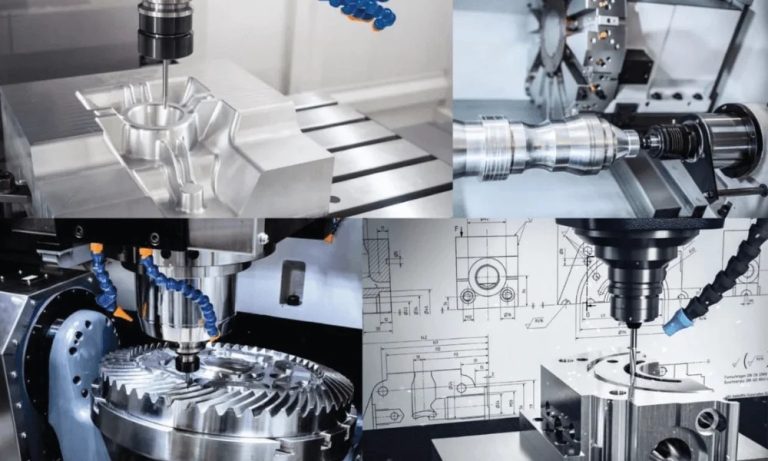
Modern production relies on accuracy and repeatable control to deliver reliable parts. Precision machining plays a key role by shaping materials with tight control and minimal variation. Smooth finishes and strong internal structure both depend on careful tool paths and stable cutting conditions that reduce defects.

When processes stay consistent, parts meet strict standards across batches while limiting waste and rework, strengthening the impact of thailand precision machining in reliable manufacturing.

Controlled Tool Path Accuracy

Careful path planning ensures each cut follows exact coordinates, reducing uneven marks and rough edges. Stable movement limits vibration, which can damage the outer layer and weaken internal strength. Proper alignment between the tool and workpiece supports uniform material removal through every pass.

Optimized Cutting Parameters

Selecting proper speed, feed rate, and depth helps maintain a steady cut that protects material quality. Balanced settings prevent overheating, which can change material properties and create weak spots. Fine-tuning reduces tool wear, keeping edges sharp for cleaner surfaces.

Surface Finish Enhancement Methods

Refinement steps improve outer quality while supporting strength within the component. Techniques focus on removing minor imperfections left after primary cuts.

  • Fine abrasive passes reduce micro scratches without affecting material strength
  • Controlled polishing improves reflectivity while keeping the structure stable and uniform
  • Minimal pressure finishing avoids surface distortion during final refinement stages
  • Consistent tool condition supports even texture across the entire component area
  • Clean handling prevents contamination that may affect outer layer quality

Material Stability Control

Temperature and stress control during machining keep the structure uniform from start to end. Managing heat avoids expansion that may distort dimensions or create internal tension. Secure clamping methods prevent movement that can introduce hidden defects.

Structural Strength Improvement

Strong internal form depends on precise cuts that avoid microcracks or stress points. Smooth transitions between features reduce stress concentration under load. Balanced removal methods maintain grain structure without unnecessary damage. The thailand precision machining supports reliable outcomes where strength and durability remain essential across repeated use.

Reliable production requires attention to both outer quality and inner strength at every stage. Careful control of movement, cutting settings, and material conditions helps reduce defects while improving consistency. Refinement techniques further enhance results without harming structure. When these elements work together, the parts deliver stable performance with fewer failures and less waste.

FAQs

Why does precision machining improve surface finish in complex components today?

It controls cutting action carefully, producing smoother results with minimal irregularities.

How does machining support structural integrity in demanding mechanical components today?

It reduces stress points and maintains material strength through controlled removal.

Can machining settings affect both finish quality and internal strength outcomes?

Yes, proper adjustments ensure smooth surfaces while preserving a strong internal structure.